
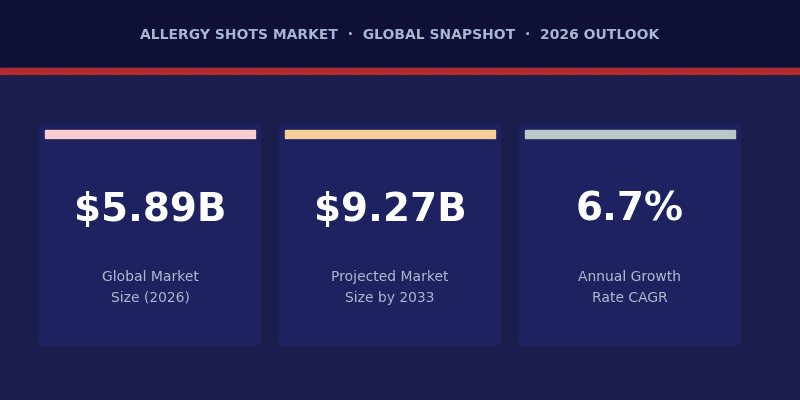
It is projected to reach $9.27 billion by 2033, indicating sustained market expansion. This growth represents a compound annual growth rate (CAGR) of 6.7% between 2026 and 2033.
The allergy shots market is expanding steadily as healthcare systems move beyond short-term symptom management toward long-term disease control. Traditionally, allergic conditions such as rhinitis or seasonal allergies have been treated with antihistamines, steroids, and decongestants. While effective in reducing symptoms, these approaches do not address the underlying immune response.
Allergy immunotherapy, particularly subcutaneous immunotherapy (SCIT), offers a different pathway. Gradual exposure to allergens helps retrain the immune system and can deliver sustained relief even after treatment completion. This long-term effectiveness is driving increased adoption.
$110 Billion — Estimated annual cost of allergy-related conditions in the U.S., including healthcare expenses and productivity loss.
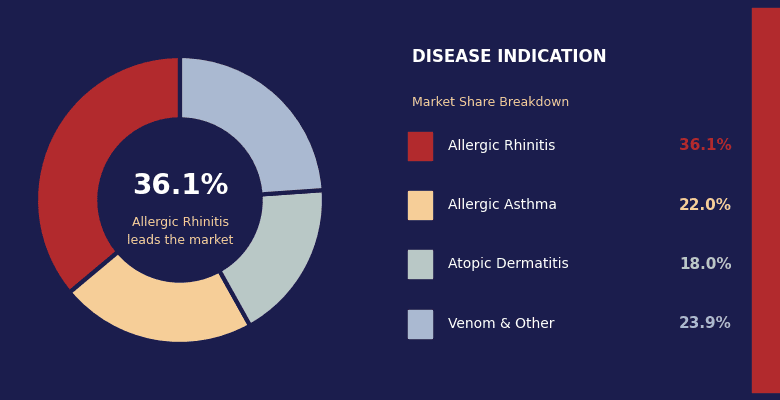
Allergic rhinitis represents the largest segment of the market at 36.1%, fueled by its widespread occurrence and the growing impact of environmental factors. In the United States alone, it affects over 50 million individuals, contributing significantly to overall treatment demand.
Pollen accounts for 24.4% of the allergen segment. Climate change, longer pollen seasons, and increased exposure are contributing to this growth. Other allergens, such as dust mites, mold, and animal dander, remain important but secondary.
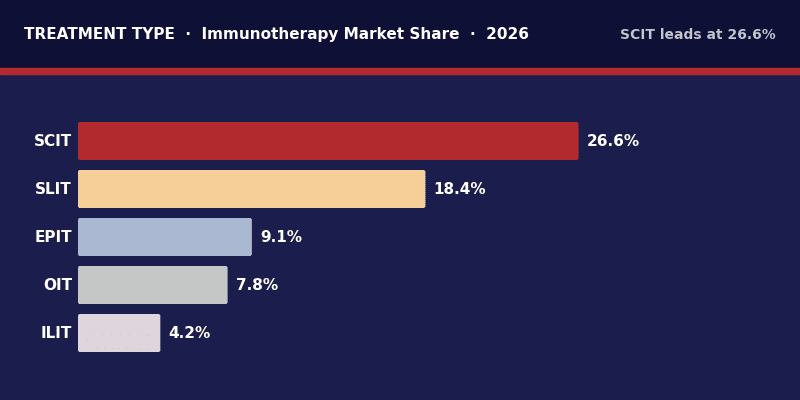
SCIT continues to lead the market with a 26.6% share, supported by its proven effectiveness and ability to treat multiple allergens simultaneously. SLIT is rapidly expanding, expected to grow at a CAGR exceeding 15%, largely due to its ease of use, suitability for home-based treatment, and better patient compliance.
Growth Drivers:
Challenges:
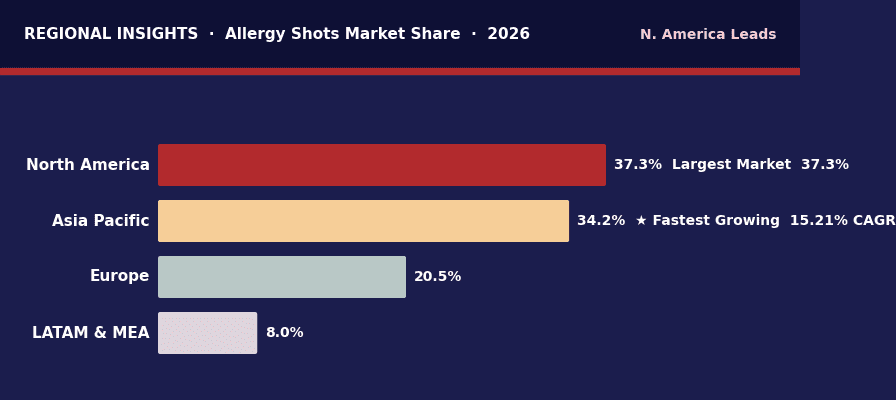
North America Leads — Asia Pacific Closing the Gap
37.3%
North America
Advanced healthcare infrastructure, strong R&D investment, and high baseline awareness of immunotherapy options sustain the largest regional market share.
Fastest Growing
Asia Pacific
15.21% CAGR projected through 2031
A large underserved patient population, rising healthcare expenditure, and recent tablet approvals in Japan and China are driving rapid adoption.
Europe
Significant market presence
High allergy prevalence, favorable EMA-aligned regulatory frameworks, and established reimbursement policies support continued growth.
LATAM & MEA
Emerging opportunity
Rising healthcare investment and growing allergy awareness are opening new market segments, though adoption remains early-stage.
Practices must be operationally ready to handle increased patient volumes and long-term treatment cycles.
Key capabilities include:
ModuleMD was built exclusively for allergy and immunology — not adapted from a generalist EHR. That distinction matters when your core revenue driver is a multi-allergen, multi-year immunotherapy program generating dozens of patient touchpoints per year.
See How ModuleMD Supports Immunotherapy Programs →
How large is the global allergy shots market in 2026?
› The global allergy shots market is valued at USD 5.89 billion in 2026 and is projected to reach USD 9.27 billion by 2033, according to Coherent Market Insights.
What is the CAGR of the allergy shots market?
› The market is projected to grow at a CAGR of 6.7% from 2026 to 2033, driven by rising allergy prevalence and increasing adoption of immunotherapy as a disease-modifying treatment.
Which disease indication has the largest share?
› Allergic rhinitis leads with a 36.1% market share, driven by its widespread prevalence — an estimated 50 million Americans are affected — and the growing shift toward long-term immunotherapy over symptom-only management.
Is SCIT or SLIT the better option for allergy practices?
› SCIT (subcutaneous immunotherapy) remains the gold standard for moderate-to-severe cases and multi-allergen patients, and generates stronger in-office revenue. SLIT is growing rapidly due to convenience — patients dose at home — but remains better suited for single-allergen sensitivities. Many practices are building workflows that support both modalities.
What are the main challenges in the allergy shots market?
› Key challenges include the risk of systemic reactions requiring clinical oversight, high out-of-pocket costs ($1,600–$4,000 per year without insurance), and long treatment durations that make patient adherence difficult. Strong scheduling and communication infrastructure at the practice level is essential to retention.
Sources
Coherent Market Insights – Allergy Shots Market Report (2026–2033)

You may like these too…